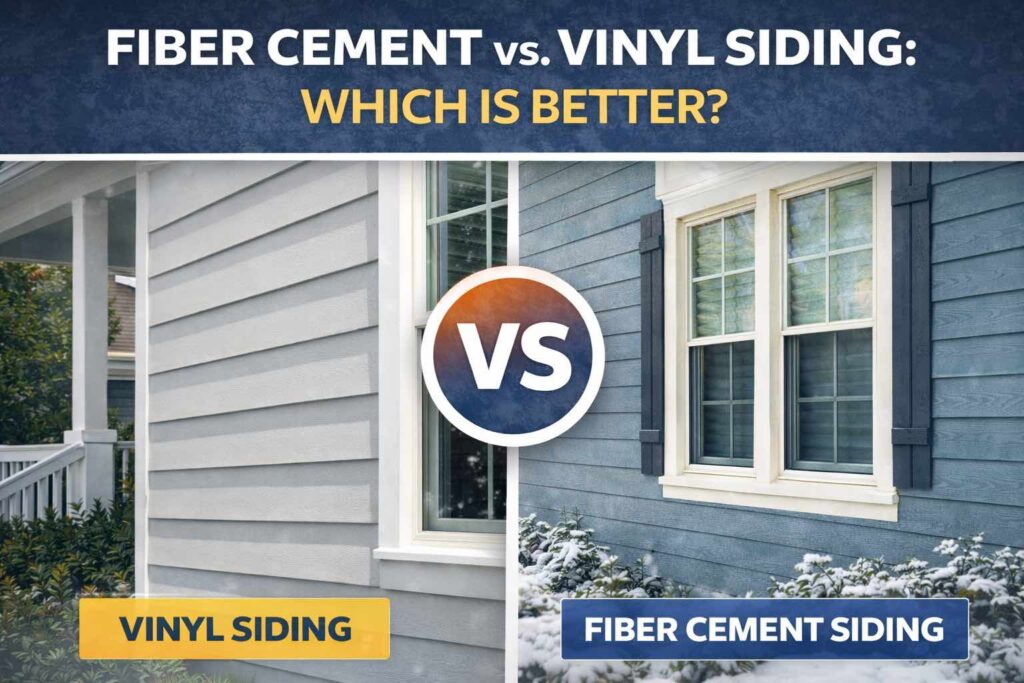
Choosing the right siding for your home is one of the most important decisions in an exterior renovation. Siding protects your home from the elements, influences energy efficiency, and plays a major role in curb appeal. Two of the most common options homeowners consider are fiber cement siding and vinyl siding. Each has advantages, but understanding how they compare can help you determine which is the better fit for your home.
What Is Vinyl Siding?
Vinyl siding is made from PVC plastic and has been a popular siding material for decades. It is widely used because it is affordable, lightweight, and available in a wide range of colors and styles.
Advantages of Vinyl Siding
Vinyl siding is known for its relatively low installation cost and minimal maintenance requirements. Because the color is built into the material, it typically does not need to be painted. It is also resistant to moisture and does not rot like traditional wood siding.
Another benefit is that vinyl siding is lighter and faster to install, which can reduce overall labor costs during a renovation project.
Limitations of Vinyl Siding
While vinyl siding is durable, it can be more susceptible to cracking or warping under extreme temperatures or impact. Strong winds or severe weather may also loosen panels over time if the installation is not done correctly.
In addition, some homeowners find that vinyl siding does not always deliver the same level of realism or premium appearance compared to other exterior materials.
What Is Fiber Cement Siding?
Fiber cement siding is manufactured using a mixture of cement, sand, and cellulose fibers. This combination creates a dense, durable material designed to withstand harsh weather conditions while mimicking the look of wood siding.
Advantages of Fiber Cement Siding
One of the biggest strengths of fiber cement siding is its durability. It performs well in a variety of climates, resisting moisture, warping, and cracking. It also handles freeze–thaw cycles effectively, which is important in regions that experience harsh winters.
Fiber cement is also non-combustible, meaning it does not ignite when exposed to fire. This added level of protection is one reason many homeowners choose it for long-term exterior upgrades.
From a design standpoint, fiber cement siding offers a high-end appearance. It can replicate the look of traditional wood siding while providing greater resistance to weather and wear.
Considerations for Fiber Cement
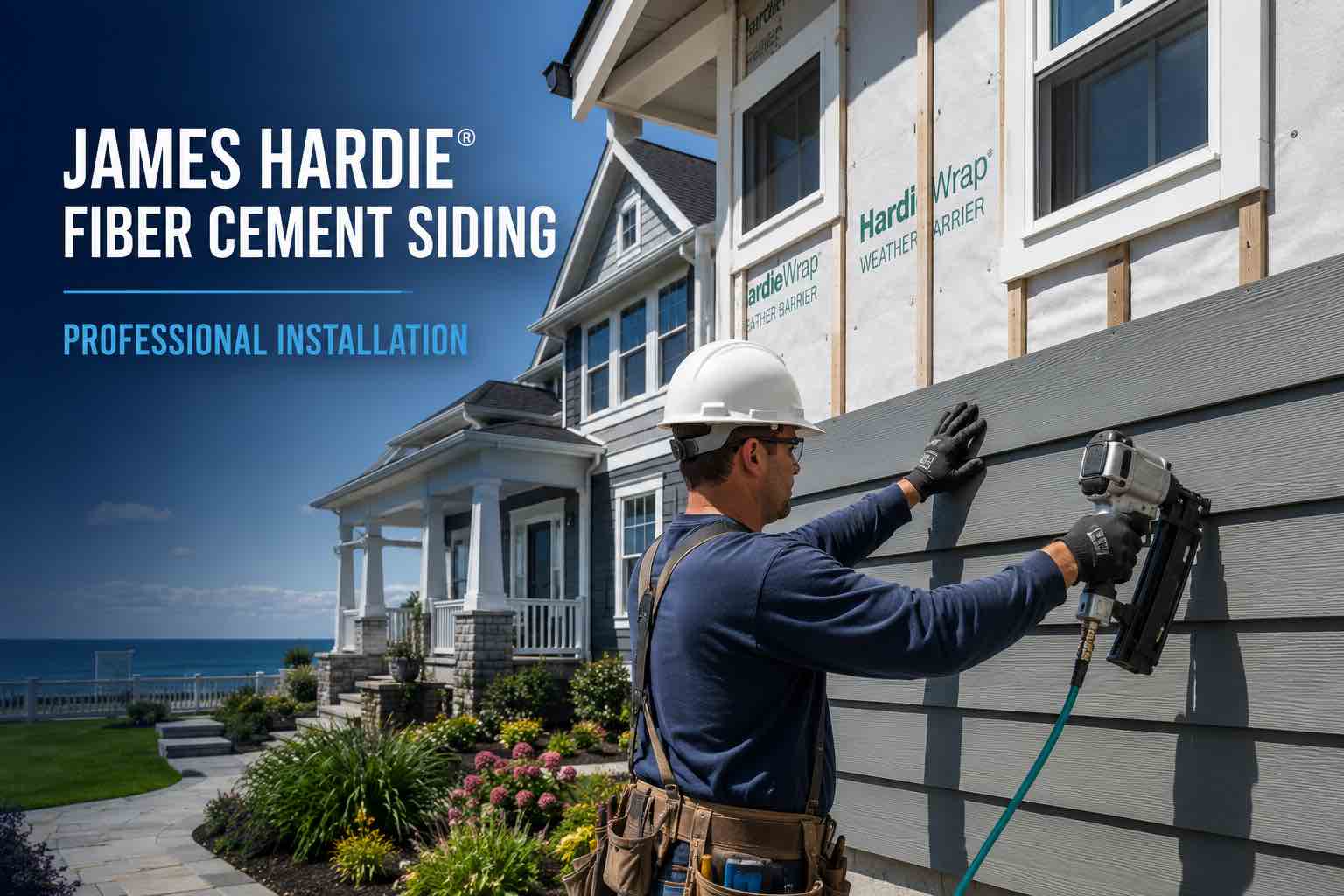
Fiber cement siding is heavier than vinyl, which means installation requires specialized tools and experienced professionals. The upfront cost is typically higher than vinyl siding, but many homeowners view it as a long-term investment due to its durability and longevity.
Comparing Fiber Cement and Vinyl Siding
When comparing the two materials, the best option often depends on a homeowner’s priorities.
Vinyl siding generally offers a lower upfront cost and simple maintenance. It can be a practical solution for homeowners seeking an economical exterior upgrade.
Fiber cement siding, on the other hand, is often chosen for its strength, longevity, and premium appearance. It performs exceptionally well in harsh weather and offers additional protection against fire and impact.
Which Siding Is Right for Your Home?
Both fiber cement and vinyl siding can improve the appearance and protection of your home when installed correctly. The right choice depends on your budget, design preferences, and the level of durability you want from your home’s exterior.
For homeowners looking for a long-lasting material that delivers strong weather resistance and a high-end finish, fiber cement siding is often the preferred option.
Upgrade Your Home’s Exterior with Schaefer Home Remodeling
If you’re considering new siding for your home, the team at Schaefer Home Remodeling can help you evaluate the best options for your property. Our experienced professionals specialize in high-quality exterior renovations designed to improve both performance and curb appeal.
Contact Schaefer Home Remodeling today to schedule a consultation and learn more about fiber cement, vinyl siding, and other exterior solutions for your home.