Siding accents are what take a home from standard to standout. While your primary siding sets the foundation, accents create contrast, highlight architectural features, and give your home a more custom, high-end look. When done right, they add depth, dimension, and personality without overwhelming the design.
Types of Siding Accents
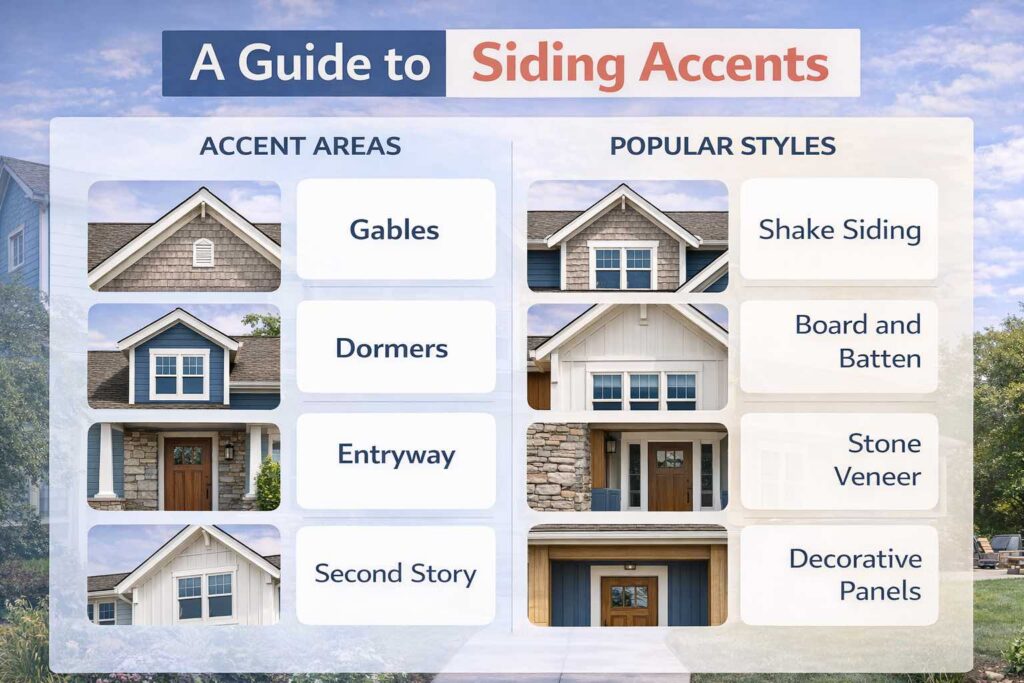
- Gable Accents – Gables are one of the most common places to add siding accents. Using a different texture—like shakes or board and batten—draws attention upward and breaks up large wall spaces.
- Dormers – Dormers naturally stand out, making them a perfect spot for accent siding. A contrasting material or color here adds visual interest without affecting the rest of the home.
- Entryway Features – Your front entry is a focal point. Accent siding around the entryway can create a welcoming, defined space that enhances curb appeal.
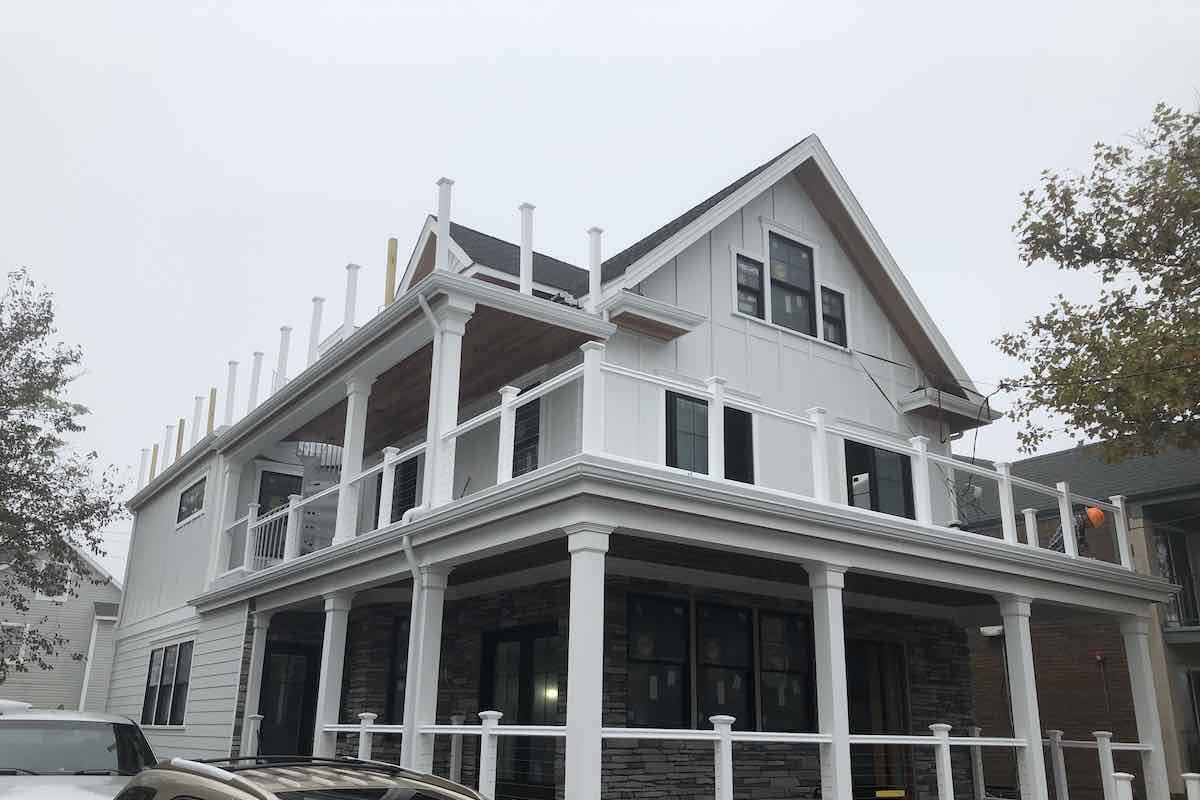
- Bump-Outs and Extensions – Any section of the home that projects outward is a great opportunity to introduce a different siding style. This helps create layers and avoids a flat, one-dimensional look.
- Second Story Highlights – Using a different siding style or color on the upper portion of the home can create a clean, modern separation between levels.
Popular Accent Siding Styles
- Shake and Shingle – These add texture and are commonly used in gables or upper sections. They’re especially popular for coastal and traditional homes.
- Board and Batten – Vertical siding works well as an accent to horizontal lap siding. It creates contrast and gives the home a more modern or farmhouse feel.
- Stone Veneer – While not technically siding, stone accents are often paired with siding to add depth and a strong, grounded look—especially around foundations or entryways.
- Decorative Panels – These can include custom patterns or geometric layouts that add a unique architectural element to the home.
Best Materials for Siding Accents
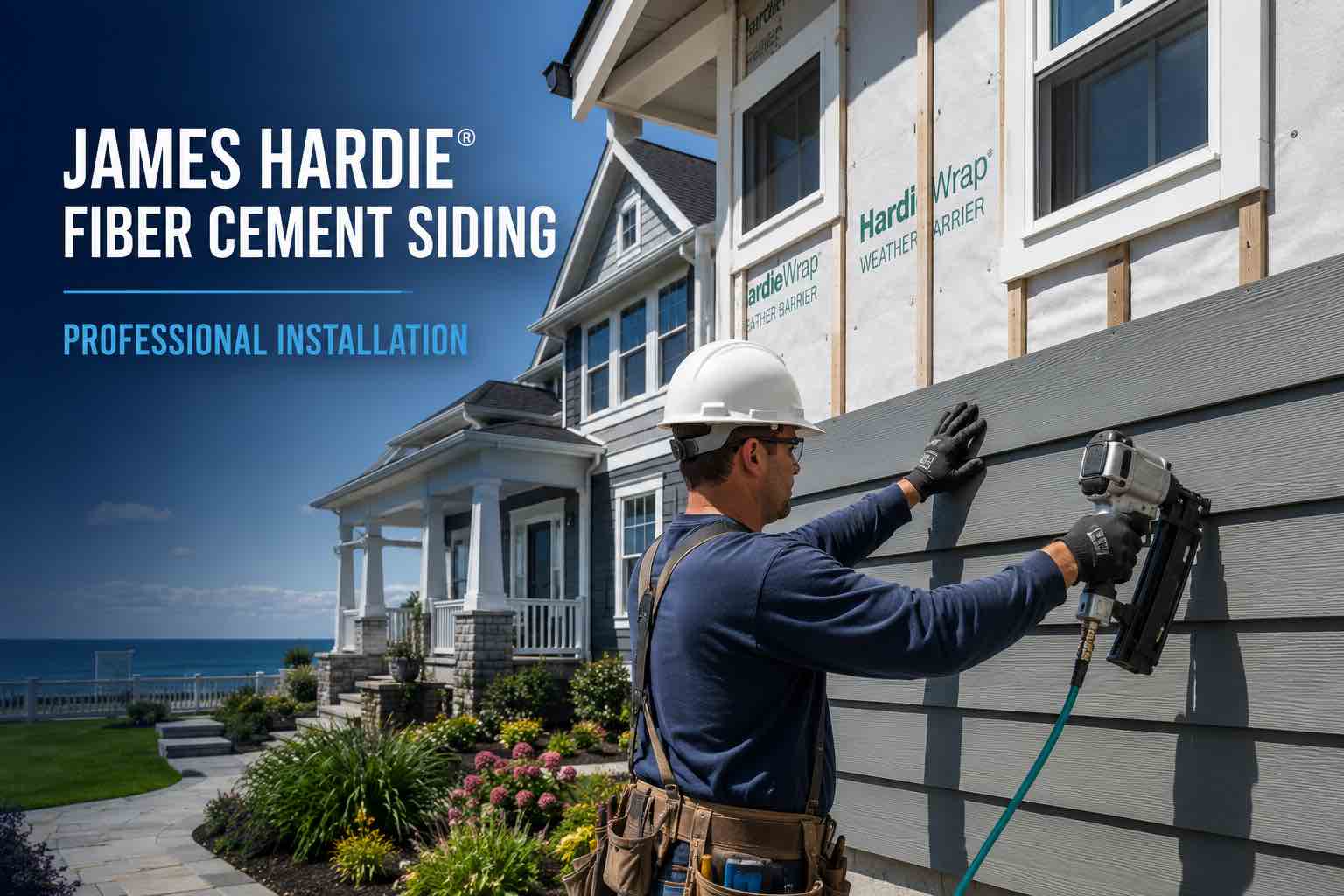
- Fiber Cement – A top choice for accents due to its durability and ability to mimic wood textures. It holds up well in Monmouth County’s coastal climate and offers long-term performance.
- Vinyl – A cost-effective option that’s easy to maintain. Vinyl accents are available in a wide range of colors and styles, making it a flexible choice.
- Natural Wood – Offers unmatched beauty and authenticity, but requires more maintenance. Often used selectively as an accent rather than across the entire home.
- Engineered Wood – Provides the look of real wood with improved durability and less maintenance, making it a strong middle-ground option.
Choosing the Right Colors
- Contrast vs. Complement – Accent siding should either contrast with your main siding to stand out or complement it for a more subtle, cohesive look.
- Popular Combinations
- Light gray siding with white trim and darker gray or black accents
- Blue siding with white trim and natural wood accents
- White siding with black accents for a modern farmhouse look
- Neutral siding with bold accent colors for doors and architectural features
- Popular Combinations
- Coastal Considerations – In Monmouth County, lighter tones, soft grays, blues, and natural textures tend to perform well both aesthetically and practically, especially near the shore.
Design Tips for a Balanced Look
- Don’t Overdo It – Too many accent styles can make your home look busy. Stick to one or two complementary accents for a clean, intentional design.
- Focus on Key Areas – Highlight architectural features like gables, entryways, and upper levels rather than spreading accents randomly.
- Keep It Consistent – Make sure your siding accents align with your home’s overall style. A modern home should use clean, simple accents, while a traditional home can handle more texture and detail.
- Think Long-Term – Trendy designs can look great now but may not age well. Choose accents that will still look good years down the line.
Bringing It All Together
Siding accents are one of the most effective ways to elevate your home’s exterior. By combining the right styles, materials, and colors, you can create a look that feels custom, balanced, and built to last.
If you’re planning a siding project and want help designing the right combination of accents for your home, Schaefer Home Remodeling can guide you through the process and help you create an exterior that stands out for all the right reasons.