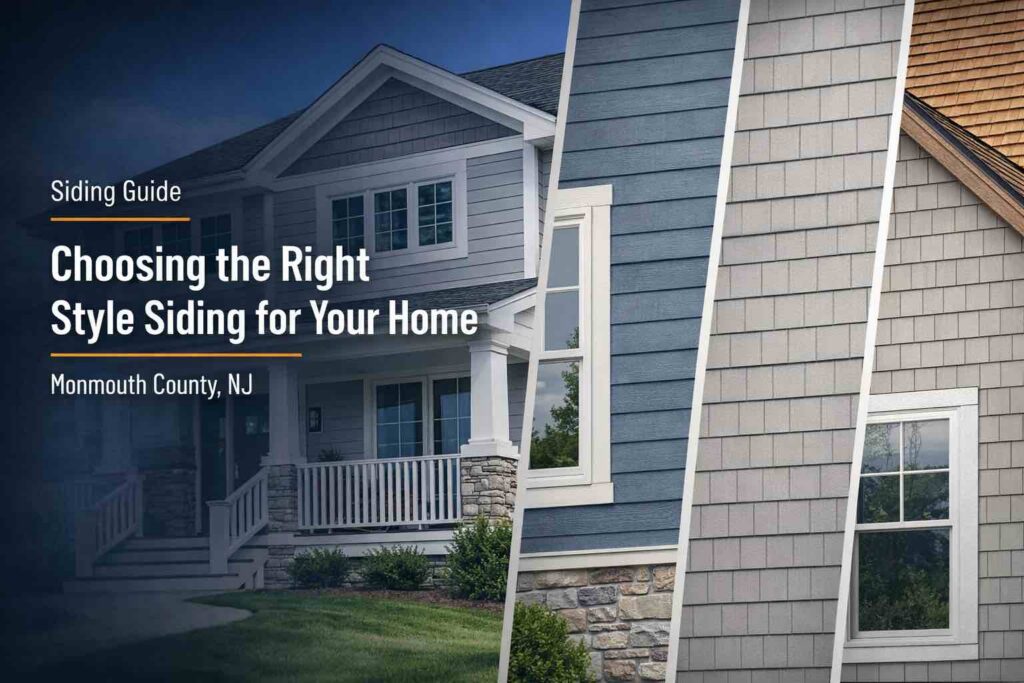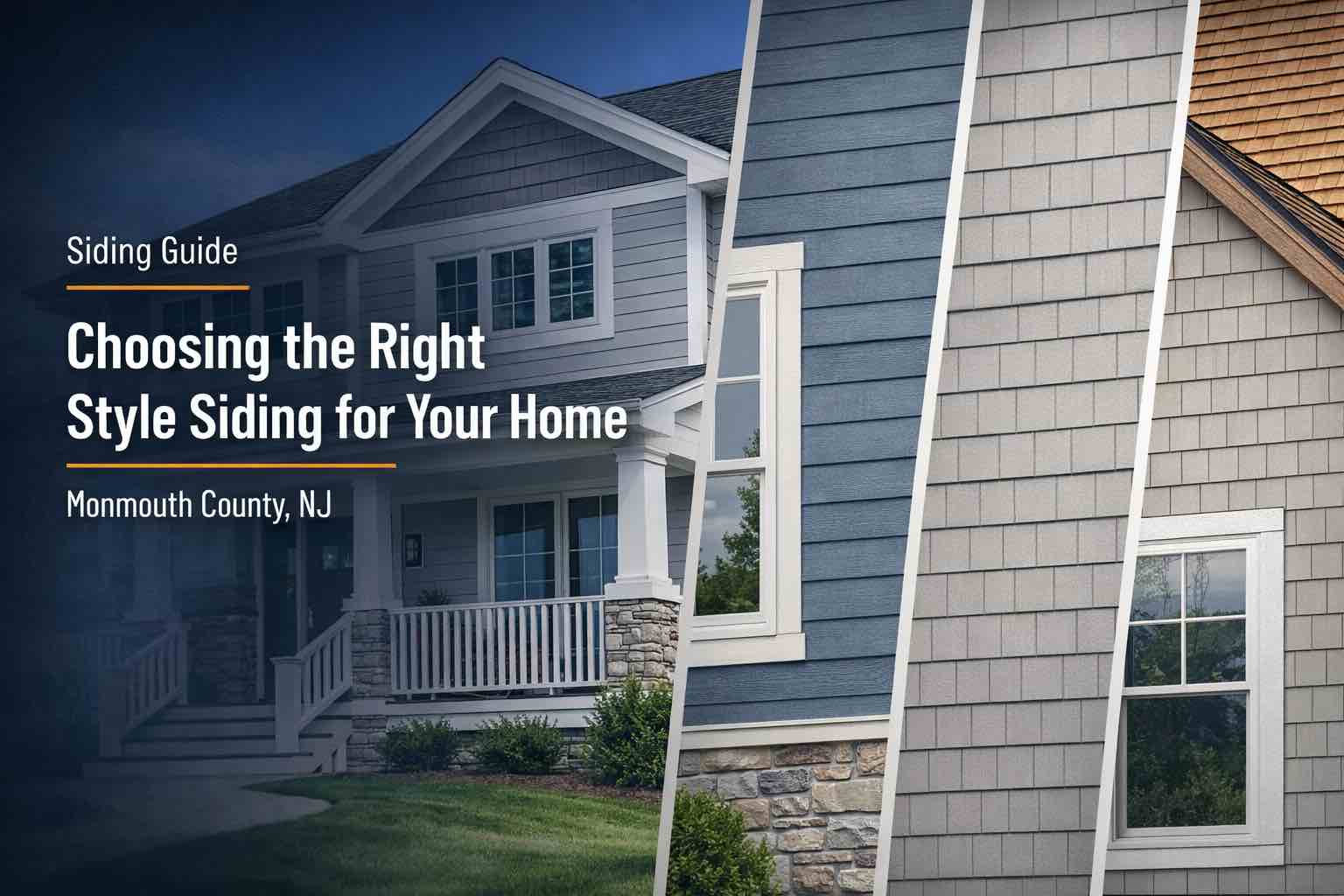
Your home’s siding does more than protect it from the elements, it defines its appearance, impacts curb appeal, and plays a major role in long-term durability. In Monmouth County, NJ, where homes face coastal moisture, strong winds, and seasonal temperature swings, choosing the right siding style is just as important as selecting the right material.
Understanding how different styles look and perform will help you make a confident, long-term decision.
Popular Siding Styles for NJ Homes
Lap Siding (Horizontal Siding)
Lap siding, also known as clapboard, is one of the most common styles throughout Monmouth County. Its clean, horizontal lines create a timeless look that works across a wide range of home designs.
This style helps make homes appear wider and more balanced, which is especially beneficial for two-story homes or narrower properties. It blends well in both traditional neighborhoods and coastal communities, making it one of the most versatile siding options available.
Board and Batten (Vertical Siding)
Board and batten siding has become increasingly popular, especially for modern farmhouse and contemporary homes. This vertical style creates strong lines that draw the eye upward, making your home appear taller and more dramatic.
It’s often used across the entire exterior for a bold look or combined with horizontal siding to create contrast. In Monmouth County, this style is frequently seen on newer builds or renovated homes looking for a more updated appearance.
Shake and Shingle Siding
Shake and shingle siding are typically used as accents rather than covering the entire home. You’ll often find them on gables, dormers, or upper sections of a house.
This style adds texture and depth, which is especially appealing for coastal homes near the Jersey Shore. It helps break up large flat surfaces and gives your home a more custom, high-end look without overwhelming the overall design.
Dutch Lap Siding
Dutch lap siding is similar to traditional horizontal siding but includes a decorative groove that creates a shadow line between each panel.
This added dimension gives your home more visual interest without straying too far from a classic look. It’s a great option for homeowners who want something slightly more detailed while still maintaining a clean and traditional appearance.
Matching Siding Style to Your Home’s Architecture
Traditional and Colonial Homes
Homes with classic architectural styles tend to look best with lap siding or Dutch lap siding. These styles maintain the home’s symmetry and preserve its original character.
Modern and Contemporary Homes
Modern homes benefit from clean lines and bold design choices. Board and batten siding or a combination of vertical and horizontal styles can create a more striking, updated look.
Coastal and Shore Homes
Homes near the coast often incorporate shake siding as an accent, paired with horizontal siding on the main structure. This combination creates a relaxed, beach-inspired aesthetic that fits naturally into the Monmouth County shoreline.
Farmhouse-Style Homes
Farmhouse designs typically feature board and batten siding, often paired with contrasting trim colors. This creates a bold yet inviting look that continues to grow in popularity.
Mixing Siding Styles for a Custom Look
Many homeowners are no longer sticking to just one siding style. Combining different styles can add depth and architectural interest to your home.
For example, using lap siding on the main body and shake siding on the gables creates a layered, high-end appearance. Mixing vertical and horizontal siding can also highlight specific sections of your home, making the overall design feel more intentional and customized.
The key is to keep the combination balanced so it enhances your home rather than overwhelming it.
Considering Monmouth County’s Climate
Coastal Exposure and Moisture
Homes in Monmouth County are exposed to salt air, humidity, and wind-driven rain. Siding styles that allow for proper water shedding and ventilation are especially important in these conditions.
Seasonal Temperature Changes
New Jersey experiences both hot summers and cold winters. Your siding needs to handle expansion and contraction without warping, cracking, or losing its appearance.
Storm Resistance
Strong storms and high winds are common in coastal areas. Choosing a siding style that can be securely installed and paired with durable materials will help protect your home over time.
The Role of Color and Contrast
Light vs. Dark Colors
Lighter siding colors can make your home feel larger and more open, while darker colors create contrast and a more modern appearance.
Coordinating with Trim and Roofing
Your siding should complement your roof, trim, shutters, and overall exterior design. A cohesive color palette helps tie everything together and enhances curb appeal.
Using Color with Mixed Styles
When combining siding styles, color becomes even more important. Using complementary tones allows each texture to stand out while still maintaining a unified look.
Choosing the Right Siding Style for Your Home
Selecting the right siding style comes down to balancing appearance, performance, and how well it fits your home’s architecture and environment. In Monmouth County, durability and weather resistance should always be part of the decision, along with the overall design.
A well-planned siding project can completely transform your home’s exterior, improving both its appearance and long-term value. Taking the time to choose the right style ensures your investment not only looks great but also performs for years to come.
Contact Schaefer Home Remodeling for a free siding estimate and to review your options, explore different style combinations, and design an exterior that fits your home, your goals, and your location.